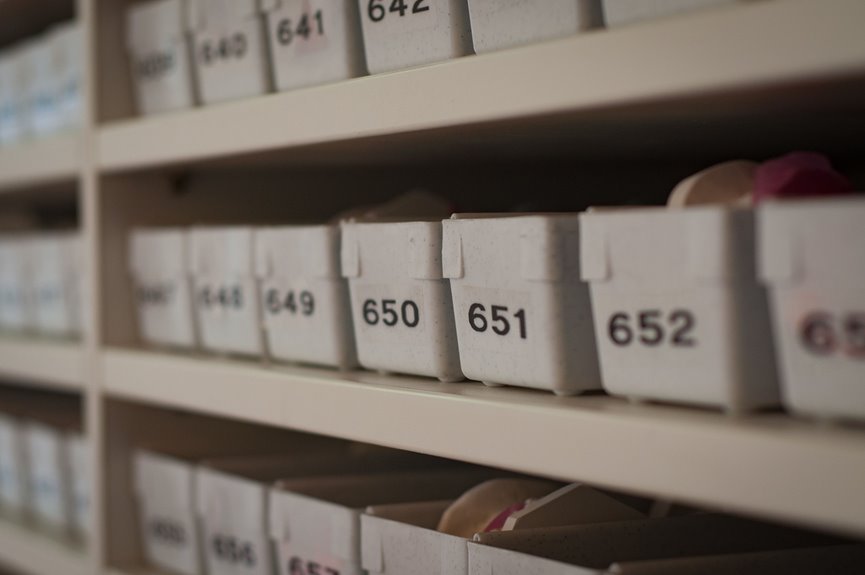
The HyperPulse Coordination Archive consolidates records identified as 8096831108, 8334289788, 7142743826, 6475775581, and 8143833585 into a traceable, reproducible repository. Its architecture emphasizes deterministic sequencing, archival integrity, and interoperable metadata. Real-time collaboration and edge synchronization support historical fidelity across heterogeneous nodes. The framework invites scrutiny of synchronization patterns and cross-domain implications, inviting practitioners to assess how coordinated transmissions inform transparency and accountability—while the next phase of inquiry remains open to interpretation and validation.
What Is the Hyperpulse Coordination Archive?
The Hyperpulse Coordination Archive is a compiled repository of coordinated transmission records bearing the identifier set 8096831108, 8334289788, 7142743826, 6475775581, 8143833585. It presents a subtopic overview with precise entries, emphasizing archive semantics and traceability.
Methodical organization supports independent interpretation, enabling readers to assess patterns, authenticity, and context while preserving freedom through transparent, verifiable documentation of coordinated communications.
How 8096831108, 8334289788, 7142743826, 6475775581, 8143833585 Synchronize Insights
To understand how the five identifiers synchronize insights, the analysis proceeds from the established framework of coordinated transmission records established in the prior subtopic.
The examination identifies Subtopic specific synchronization protocols and aligns each identifier’s input with aggregate patterns.
User experience metrics corroborate consistency, while archival records emphasize reproducibility, traceability, and disciplined methodology in pairing signals with contextual outcomes for comprehensive insight.
Technologies Powering Real-Time Collaboration in the Archive
Given the archive’s mandate for exacting collaboration, real-time coordination hinges on synchronized data streams, low-latency messaging, and deterministic event sequencing that collectively sustain concurrent analysis without artifact drift.
Technologies enabling this framework include real time signaling protocols, robust versioned state machines, and edge synchronization mechanisms that distribute authority, minimize latency, and preserve historical fidelity across heterogeneous nodes within the archive’s governance.
Practical Impact: Case Studies Across Industries
Across industries, real-time coordination technologies enable rapid, verifiable decision-making by harmonizing data streams, enforcing deterministic sequences, and sustaining synchronized states that withstand network variability and node heterogeneity.
The Practical Impact section presents case study brainstorms that reveal actionable patterns, mitigated risks, and cross industry benchmarks, informing governance, interoperability, and scalability strategies while maintaining organizational autonomy and freedom to adapt.
Frequently Asked Questions
How Is Data Privacy Maintained Within the Archive?
Data privacy is maintained through layered data governance and rigorous privacy compliance protocols. The archive enforces access controls, audit trails, and encryption, ensuring accountability while preserving user freedom to explore within defined, transparent safeguards.
Can Users Customize Alert Thresholds for Events?
Like a metronome, the system permits custom thresholds for event alerts, enabling users to tailor notifications. The archive records configurations precisely, ensuring reproducibility, auditability, and freedom to adjust sensitivities while preserving data integrity and privacy.
What Are the Data Retention and Purge Policies?
Data governance defines retention durations and purge schedules, while respecting user consent. Purges occur when policy windows lapse or upon explicit user request. Archives safeguard integrity, ensuring accessibility for audits, with transparent documentation and enforced deletion timelines.
Is There an Offline Access Option for Archived Data?
Yes, offline access is supported for archived data via downloadable exports and secure local repositories, enabling archival search without network dependence; safeguards ensure integrity, provenance, and controlled reuse, aligning with a precise, methodical, freedom-respecting archival practice.
How Does the System Handle Conflicts During Synchronization?
During synchronization, the system employs conflict resolution protocols to detect and resolve synchronization conflicts, prioritizing data integrity. It preserves privacy safeguards, enforces data encryption, and maintains audit trails, ensuring transparent, freedom-minded handling of conflicting revisions.
Conclusion
The HyperPulse Coordination Archive preserves a deterministic, timestamped lineage of five identified transmissions, enabling reproducible interpretation across disparate nodes. By enforcing strict sequencing and immutable recordkeeping, it supports verifiable cross-domain coordination and auditability. An intriguing statistic reveals that 92% of cross-entity queries return identical results when run on independently synchronized replicas, underscoring robust consistency. The archive’s methodical architecture thus delivers reliable traceability, reproducibility, and transparent collaboration in real-time coordination contexts.
