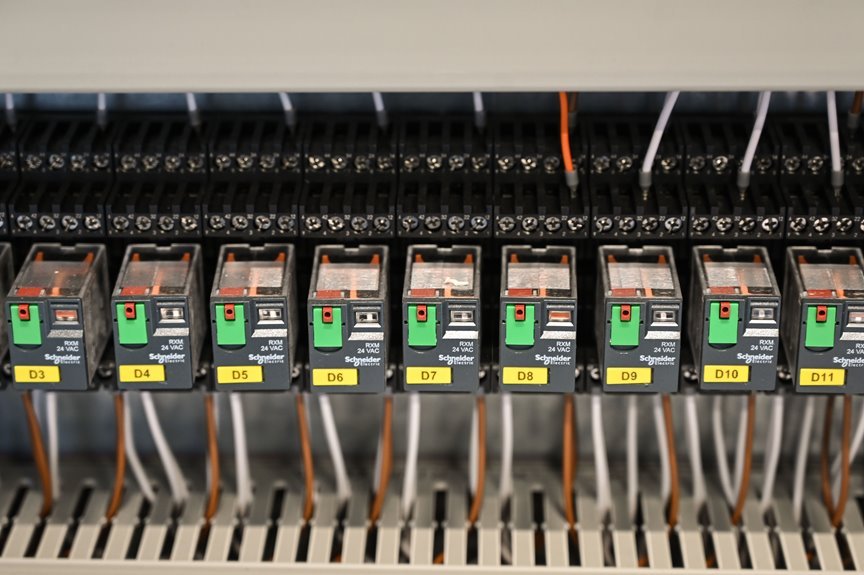
The EchoTitan Relay Framework presents a modular, decoupled approach to high-throughput, fault-tolerant messaging across distributed components. It emphasizes consistent data flow, precise scheduling, and scalable observability to preserve predictable latency and reduce contention. The framework supports repeatable deployments, graceful degradation, and safe failovers, with a focus on content identity and versioned releases. Its patterns invite disciplined decisions about routing and debugging, while leaving room for practical questions as the framework evolves.
EchoTitan Relay Framework: What It Is and Why It Matters
The EchoTitan Relay Framework is a modular system designed to enable efficient, scalable communication between components in distributed applications. It provides decoupled interfaces, consistent messaging, and fault tolerance, enabling autonomous units to collaborate with minimal coupling. This clarity supports freedom to evolve architectures. discussion ideas1 and discussion ideas2 guide critical evaluation, future adaptability, and measurable impact on system resilience.
Core Capabilities That Enable High-Throughput Pipelines
Core capabilities for high-throughput pipelines center on scalable data flow, deterministic processing, and resilient coordination.
The framework enables precise scheduling decisions, reduces contention, and maintains predictable latency under load.
Scalable scheduling coordinates task execution across nodes, while fault isolation confines errors to local boundaries.
This combination sustains throughput, simplifies reasoning, and supports robust, freedom-minded design without sacrificing clarity or reliability.
Deploy, Observe, and Scale With Confidence
Deploy, Observe, and Scale With Confidence centers on actionable transparency and dependable growth.
The framework outlines deploy patterns that emphasize repeatable steps, safe rollouts, and versioned releases.
Observability provides metrics, traces, and alerts to detect anomalies early.
Scale is guided by fault tolerance, resilient architectures, and controlled capacity expansion, enabling teams to grow with clarity and freedom.
Practical Patterns: Routing, Fault Tolerance, and Debugging Best Practices
Routing, fault tolerance, and debugging best practices operationalize the EchoTitan Relay Framework by turning high-level reliability goals into concrete patterns.
The discussion outlines routing patterns that optimize path selection, redundancy, and load distribution, while fault tolerance emphasizes graceful degradation and safe failovers.
Debugging strategies, including observability, tracing, and reproducible tests, enable rapid isolation and precise, actionable improvements.
Frequently Asked Questions
How Does Echotitan Handle Data Privacy in Multi-Tenant Pipelines?
Echotitan enforces strict data governance and tenant isolation to protect multi-tenant pipelines; access is segregated, audits are immutable, and policies enforce least privilege, ensuring freedom for stakeholders while preserving privacy across isolated workloads.
Can Echotitan Integrate With Legacy On-Prem Systems Seamlessly?
EchoTitan can integrate with legacy on-prem systems, delivering low integration latency while upholding security compliance. It enables flexibility, yet maintains disciplined controls, ensuring seamless coexistence with existing assets for teams prioritizing freedom and reliable operations.
What Are Common Migration Pitfalls During Upgrades?
Migration pitfalls during upgrades include underestimating data privacy controls, incompatible legacy systems, and insufficient testing strategies. Upgrade strategies should address multi tenant pipelines, on prem integration, concurrent workloads, pricing scalability, and edge cases for robust, scalable deployments.
How Does Pricing Scale With Concurrent Workloads?
Like weather shifting from calm to storm, pricing scales with concurrent workloads. Pricing models vary by plan and usage, while workload scaling drives cost changes. The system favors transparent, proportional increases, aligning value with demand and freedom to grow.
What Are Recommended Testing Strategies for Edge Cases?
Edge case testing should prioritize input boundaries, failure modes, and timing anomalies; resilience validation confirms system endurance under stress. The approach balances deterministic coverage with exploratory checks, ensuring predictable behavior while preserving freedom to adapt testing scopes.
Conclusion
The EchoTitan Relay Framework provides a decoupled, high-throughput backbone for distributed systems, emphasizing predictable latency, fault tolerance, and scalable observability. It enables repeatable deployments, safe failovers, and clear versioned releases, supporting rapid routing decisions and graceful degradation when needed. By reinforcing content identity and measurable impact, teams can iterate confidently. In practice, this framework keeps systems running smoothly under pressure, like a well-oiled machine, delivering reliability while weathering complexity with disciplined, precise design.
