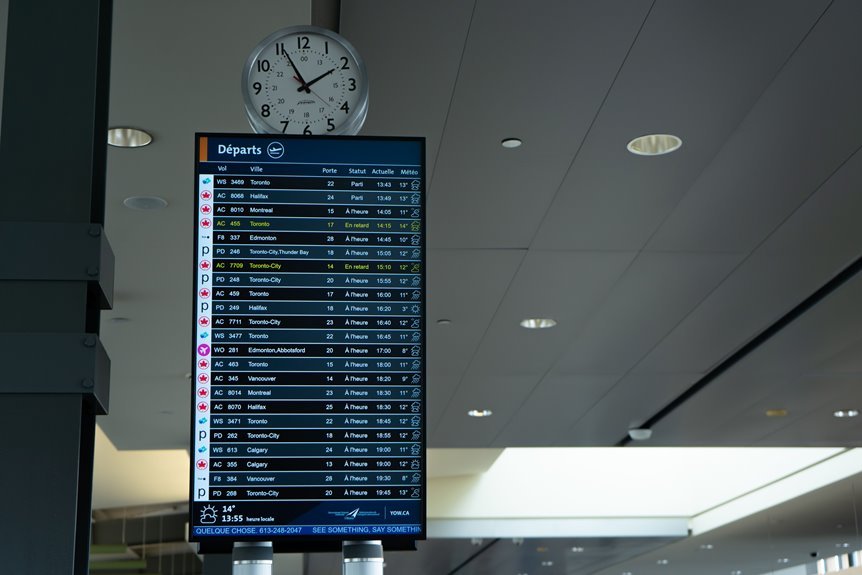
The Departure Time Fight centers on when to start a journey, not just when to push back. It questions autonomy versus coordination, and who bears the burden of precision. Minutes matter, but so do signals, systems, and human limits. The discussion probes why timing is treated as leverage, and what real costs precision imposes on crews and passengers. What choices survive the friction of schedules, and at what point does insistence on exact departure become a liability?
What the Departure Time Fight Really Is
The departure time dispute centers on what counts as a fair or practical moment to begin a journey, rather than on the mechanics of schedules themselves. What the departure time fight really is reveals a clash between autonomy and coordination. It scrutinizes flight planning assumptions, questions timing as leverage, and insists on clarity about choice, responsibility, and the cost of precision. departure time, flight planning.
The Pressures Pilots and Crews Face in Minutes
Minutes dominate the operational reality for pilots and crews, shaping decisions with a relentless cadence that leaves little room for deviation. This scrutiny reveals how departure pressure tightens margins, forcing snap judgments under chaotic clocks. Investigators describe crew fatigue as a silent multiplier, dulling perception and reaction. The discipline demanded masks vulnerabilities, prompting questions about resilience, risk, and freedom to choose safely.
Systems, Signals, and Small Wins That Save Seconds
Attention turns from the pressures that shape decisions to the mechanisms and micro-optimizations that prevent time loss. Systems, signals, and small wins form a disciplined ecology: departure time hinges on precise boarding, sequencing, and communication.
The flight crew relies on robust checklists, unambiguous signals, and error-reducing interfaces. Skeptical scrutiny reveals friction points; improvements lie in clarity, redundancy, and intentional tempo.
Real-World Decisions: From Pencil Marks to Takeoff
Real-world decisions in aviation hinge on the imperfect translation of pencil marks into concrete actions, where timing, risk, and resource constraints collide at the runway threshold.
This process tests departures as much as doctrines: departure timing depends on dynamic crew coordination, weather, and equipment realities.
Skeptically, observers question whether bureaucratic buffers harm or help crew cohesion and operational discipline.
Frequently Asked Questions
How Does Weather Affect the Departure Time Fight?
Weather delays influence departure times, creating timetable uncertainty as crews adapt. The analysis is probing and thorough, skeptical of assumed punctuality, framing how weather delays pressure schedules and reveal gaps in risk planning for an audience seeking freedom.
What Is the Passenger Impact of Delaying Departures?
Delays cause passenger disruption by cascading connections and missed opportunities, while departure optimization aims to minimize fallout. The analysis remains probing: if incentives align, travelers gain predictability; otherwise, skepticism persists about whether schedule shifts truly improve overall freedom of movement.
Are There Legal Limits to Countdown Adjustments?
The question probes whether legal limits exist on countdown adjustments; evidence suggests no universal cap, but strict regimes govern disclosure and safety. This scrutiny favors legal compliance, time synchronization, and accountability, challenging operators to justify deviations against freedom-seeking stakeholders.
Which Technologies Measure Time Savings Most Accurately?
A clockwork needle threads certainty: time synchronization, precision clocks, and specialized timing bridges measure savings most accurately. Yet skepticism remains: methods vary by environment, calibration, and latency, demanding transparent benchmarks before trusting any claimed time savings beyond freedom’s vigilance.
How Do Crew Fatigue Laws Influence Schedule Changes?
Fatigue laws constrain scheduling deviations by mandating rest periods and duty limits, which in turn compel adjustments. Fatigue management becomes a driver of timetable changes, prompting operators to reevaluate crew availability, rotations, and contingency buffers with skeptical scrutiny.
Conclusion
The departure time debate distilled into minutes, yet the stakes extend far beyond clock hands. A telling statistic shows that peak-slot variability can add up to 20–30 seconds per leg, compounding across a fleet and narrowing the safety buffer. In probing, skeptical terms, the piece reveals how micro-decisions—pencil marks, clearance sequencing, crew readiness—shape outcomes more than grand policy. The argument invites scrutiny of where precision serves safety and where it masks systemic friction.
