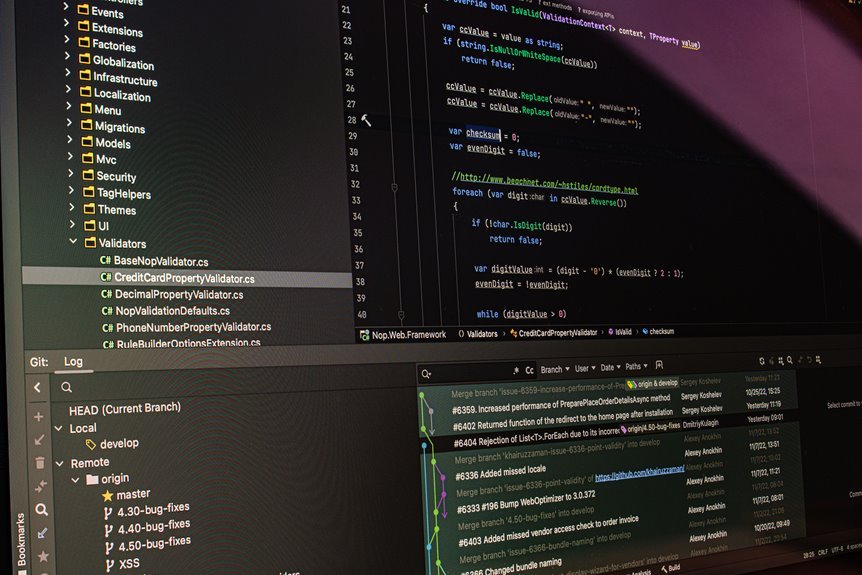
Mogothrow77 software openness rests on visible repositories, clear licensing, and transparent governance. Core code should be publicly shareable, inspectable, modifiable, and redistributable under an established open-source license. Access to released components occurs via official channels. The framework balances openness with security, outlining governance, contribution guidelines, and licensing to sustain trust. This balance invites a practical discussion about what’s truly open and what remains guarded, prompting further examination of existing gaps and opportunities.
What Counts as Open Source for Mogothrow77?
Determining what counts as open source for Mogothrow77 hinges on publicly shareable code that can be inspected, modified, and redistributed under a license that complies with established open-source criteria.
The definition centers on accessible repositories, clear licensing governance, and transparent governance processes.
This framework supports collaboration, permits inspection and improvement, and ensures freedom to study, modify, and distribute open source implementations.
Which Components Are Released and How to Access Them
Which components are released and how to access them? The article outlines the released modules and how to obtain them through public repositories and official channels. It presents an open source definition for clarity and reproducibility. Access is organized around a transparent governance model, with clear contribution paths and versioning, ensuring freedom to study, modify, and share the software.
Licensing, Governance, and Contribution Guidelines
Licensing, governance, and contribution guidelines outline the legal terms, decision-making processes, and participation rules that shape Mogothrow77 Software’s open-source ecosystem.
The framework emphasizes licensing governance, transparent governance structures, and accessible contribution guidelines openness.
It fosters inclusive collaboration while maintaining security, clear rights, and responsibilities.
This balance supports freedom, accountability, and community-driven improvements without compromising code integrity or user trust.
Openness vs. Security: Trade-Offs and Best Practices
Openness and security sit at a deliberate tension: openness accelerates collaboration and transparency, while security safeguards code and users from harm. Open source ecosystems balance these forces through governance policy that clarifies risk, accountability, and recovery.
Practical security tradeoffs arise in design, testing, and disclosure. Clear contribution guidelines empower contributors, while governance maintains trust and long-term resilience without stifling innovation.
Frequently Asked Questions
How Is Open Source Funding for mogothrow77 Allocated?
Funding governance determines allocation for mogothrow77 open source projects, with transparent budgeting, community oversight, and periodic reviews. Collaboration incentives reward contributions and cross-project partnerships, aligning financial support with impact, sustainability, and freedom-loving goals across the ecosystem.
Can End Users Modify and Redistribute mogothrow77 Software?
End user modification and redistribution rights exist under the project’s OSS licenses; funding allocation methods support ongoing development. The community shapes decisions, follows OSS monetization rules, and encourages cross platform bug reporting and collaborative, transparent feature decisions.
Are There Monetization Restrictions Within mogothrow77 OSS?
Monetization restrictions exist? The statement clarifies that monetization restrictions apply to mogothrow77 OSS, guiding contributions and licensing. Funding allocation is transparent, with collaborative governance ensuring open funding paths while preserving freedom for users and developers alike.
What Is the Community Decision Process for Feature Changes?
The community governance process relies on transparent feature prioritization discussions, licensing compliance checks, and contributor onboarding, enabling collaborative decision-making. Decisions emerge through open forums and votes, ensuring freedom-to-contribute while maintaining responsible governance and clear licensing boundaries.
How Is Bug Reporting Handled Across Different Platforms?
Bug reporting is coordinated through a centralized tracker with platform-specific channels; platform differences are documented openly. Funding allocation informs prioritization of bug fixes, feature changes, and end user modification, while redistribution rights, monetization restrictions, and community governance remain transparent.
Conclusion
Mogothrow77 software is openly accessible and built on transparent, collaborative foundations. In practice, a substantial portion of code and components are released under recognizable open-source licenses, housed in public repositories with clear governance and contribution processes. Access, licensing, and governance are designed to be straightforward and fair, inviting inspection and modification. The system balances openness with security through documented guidelines. In short: open, collaborative, and continuously improving—like a giant, well-lit workshop where everyone is welcome, yet properly supervised.
