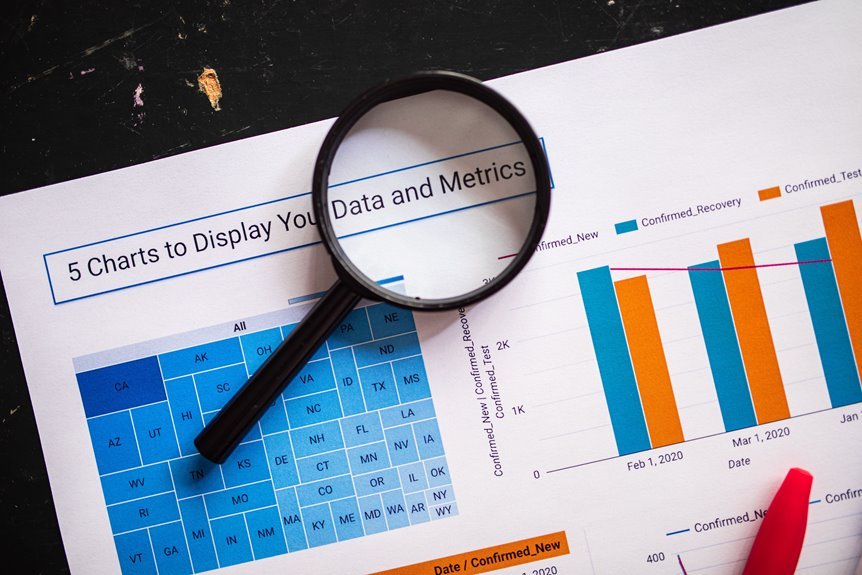
The Enterprise Communication Flow Integrity Assessment Report synthesizes governance, risk, and compliance findings across five case IDs: 8323256491, 18007834746, 8663233462, 7322681119, and 8447891750. It highlights information flows, breach vectors, and policy deviations with linkages to audit trails and control metrics. The analysis emphasizes accountability, data-driven risk indicators, and remediation prioritization. A clear path emerges for targeted controls and continuous monitoring, yet crucial gaps remain, prompting a focused follow-up on prioritization and governance improvements.
What the Enterprise Communication Flow Integrity Report Reveals
The Enterprise Communication Flow Integrity Report reveals how information moves across organizational barriers, identifying gaps where data may be exposed, altered, or misrouted. It catalogs breach vectors, data governance controls, and policy gaps, emphasizing accountability and traceability.
Findings support risk remediation prioritization, quantify exposure, and shape governance standards; they guide targeted interventions while preserving operational freedom through defined, lawful safeguards and continuous monitoring.
How to Read the 5 Case IDs: 8323256491, 18007834746, 8663233462, 7322681119, 8447891750
This section decodes the five case IDs—8323256491, 18007834746, 8663233462, 7322681119, and 8447891750—by presenting each identifier as a discrete data point within the governance framework, enabling rapid cross-reference to incident records, audit trails, and control effectiveness metrics.
Interpretation gaps and data lineage are assessed to ensure transparent, risk-focused policy alignment and auditable traceability.
Pinpointing Delays, Access Gaps, and Policy Deviations for Action
Pinpointing delays, access gaps, and policy deviations requires a structured, data-driven assessment to quantify risk exposure and inform corrective actions. The analysis highlights process gaps and policy drift as core risk indicators, mapping bottlenecks to governance controls. Findings support targeted remediation, prioritize accountability, and enable proactive monitoring, ensuring alignment with enterprise objectives while preserving organizational freedom and resilience.
Practical, Ready-to-Implement Governance and Performance Improvements
How can practical governance and performance improvements translate into measurable risk reduction and sustained compliance within enterprise communications? The assessment proposes targeted controls, continuous monitoring, and policy-to-practice mapping to enable compliance alignment. Governance calibration aligns roles, thresholds, and accountability with risk appetite, enabling repeatable outcomes, timely remediation, and transparent reporting across modalities while preserving organizational autonomy and operational freedom.
Frequently Asked Questions
What Data Sources Were Used Beyond the Five Case IDS?
The data sources beyond the five case IDs include logs, telemetry, and policy audits; data privacy considerations guided collection limits and storage practices, emphasizing risk assessment and governance while preserving user freedoms within compliant framework constraints.
How Frequently Is the Report Updated for New Flows?
A compass needle steadies the course: the report updates on a defined frequency of updates, with a data refresh cadence aligned to risk cycles, policy deviation criteria, and privacy protection mechanisms, balancing autonomy with governance.
Can the Report Be Customized for Different Departments?
The report can be customized for departments, enabling department specific metrics within a defined customization scope. It maintains a data-driven, risk-focused posture and policy alignment, while preserving audience-directed freedom to decide scope and prioritization.
What Are the Failure Criteria for True Policy Deviations?
Failure criteria for true policy deviations are timestamped, context-rich breaches where documented policies, controls, and risk thresholds are violated beyond tolerance, triggering escalation, impact assessment, and remediation plans aligned with governance, compliance, and operational risk appetite.
How Is User Privacy Protected in Flow Data?
User privacy in flow data is protected by privacy controls and data minimization, reducing exposure while preserving analytic utility; the assessment emphasizes ongoing risk assessment, access governance, and transparent policy alignment to balance freedom with accountability.
Conclusion
The assessment reveals actionable risk signals across all five cases, with clear delays, access gaps, and policy deviations that elevate breach likelihood. Data-driven indicators quantify exposure, guiding prioritized remediation and continuous monitoring. With auditable controls and governance alignment to risk appetite, the organization can close gaps, accelerate remediation, and enhance accountability. Like a compass in a storm, these findings direct targeted actions toward resilient, policy-driven enterprise communication flow integrity.
